Cybersecurity for
Malaysian Businesses.
Ransomware attacks on Malaysian SMEs increased 57% in 2024. Most businesses were breached through unpatched software, weak passwords or phishing emails – all preventable. Cybergate provides enterprise-grade cybersecurity configured for Malaysian business budgets.
Malaysian SMEs Are the Primary Target. Not Large Corporations.
Cybercriminals specifically target small and medium businesses in Malaysia because they know most do not have dedicated IT security staff, their software is often outdated and unpatched, and staff have not been trained to recognise phishing attempts. The perception that “we are too small to be a target” is one of the most dangerous beliefs in Malaysian business today.
In 2024, Malaysian businesses reported over 5,000 cybersecurity incidents to CyberSecurity Malaysia, with ransomware, phishing and business email compromise being the most common attack types. The average cost of recovering from a ransomware attack in Malaysia – including downtime, data recovery and reputational damage – exceeds RM2.5 million for an SME.
The good news is that 95% of successful cyberattacks exploit known, preventable vulnerabilities. Unpatched software, no MFA, weak passwords and unmonitored networks account for the vast majority of breaches. Professional cybersecurity management closes these gaps systematically and continuously.
Ransomware
Encrypts all your files and demands payment. Even with backups, recovery takes days. Prevention is far cheaper than recovery.
Phishing & Business Email Compromise
Fake emails trick staff into revealing passwords or transferring money. BEC attacks cost Malaysian businesses millions annually.
Malware & Spyware
Hidden software that monitors keystrokes, steals credentials and exfiltrates data silently. Often present for months before detection.
Insider Threats & Data Leaks
Departing staff copying data, accidental oversharing and weak access controls. Access audits and DLP controls prevent most incidents.
Full-Spectrum Cybersecurity for Malaysian Businesses
We layer multiple security controls to protect your business at every point – devices, network, email, cloud and people.
Endpoint Protection (EDR)
Enterprise-grade endpoint detection and response deployed on every device. Behavioural threat analysis catches zero-day attacks that traditional antivirus misses. Remote isolation of infected machines within minutes.
Firewall Installation & Management
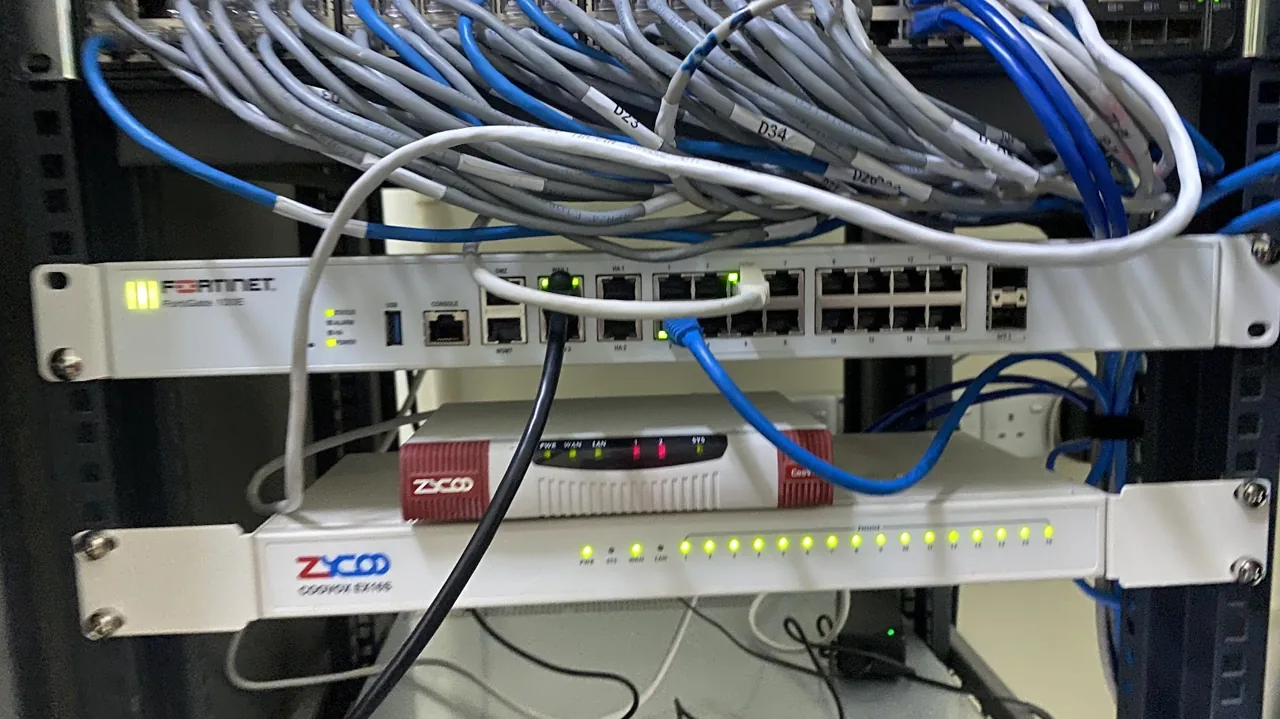
Fortinet firewall installation, configuration and ongoing management. Next-generation firewall features including IPS, web filtering and application control. Monthly rule reviews and firmware updates included.
Multi-Factor Authentication
MFA implementation across Microsoft 365, remote access, VPN and business applications. MFA blocks over 99% of credential-based attacks. We handle rollout across your entire team with minimal disruption.
Vulnerability Assessment
Systematic scan of your entire IT environment to identify unpatched software, misconfigurations, weak credentials and open ports. Written report with prioritised remediation steps. Available as one-time or quarterly.
Email Security & Anti-Phishing
Advanced email filtering, DMARC and SPF configuration, phishing simulation training and business email compromise protection for Microsoft 365 and Google Workspace. Stop attacks before they reach your staff.
Backup & Ransomware Recovery
Immutable backup configuration that ransomware cannot encrypt, regular restore testing and documented recovery procedures. If the worst happens, we have a tested plan to get you operational quickly.
Security Monitoring
Continuous monitoring of logs, alerts and threat intelligence for managed clients. Unusual login times, suspicious file access, unexpected outbound traffic – all flagged and investigated before damage occurs.
Security Awareness Training
Staff training on phishing recognition, password hygiene, safe browsing and PDPA obligations. People are the weakest security link – training them is one of the highest-ROI security investments any business can make.
PDPA Compliance Advisory
Data audit, privacy policy review, technical controls implementation and staff awareness for Personal Data Protection Act 2010 compliance. Protect your customers, avoid fines and demonstrate accountability to regulators.
Cybersecurity That Actually Protects Your Business
Not every IT company understands cybersecurity. We are Fortinet certified, Microsoft Defender trained and have hands-on experience responding to real incidents in Malaysian businesses.
Fortinet Certified Engineers
Our engineers are Fortinet certified for firewall installation, VPN configuration and network security. Not just IT generalists who install antivirus and call it security.
Real Incident Response Experience
We have responded to ransomware attacks, business email compromise incidents and data breaches for Malaysian businesses. We know what to do when it matters most.
Layered Security Approach
No single tool stops all threats. We implement multiple overlapping controls – firewall, EDR, MFA, email security, monitoring – so that if one layer is bypassed, others catch it.
Written Reports, Not Just Dashboards
Monthly security reports written in plain language. What was detected, what was blocked, what needs attention next. Your management team can actually read and understand it.
PDPA Compliance for Malaysian Businesses: What You Need to Know
The Personal Data Protection Act 2010 (PDPA) applies to any Malaysian business that collects, processes or stores personal data. This includes names, IC numbers, email addresses, phone numbers, payment information and any other information that can identify an individual. If your business has a customer database, processes HR records or handles any client information, you are subject to PDPA.
Non-compliance with PDPA carries serious penalties. Individual officers can face fines up to RM300,000 and imprisonment up to two years. Companies can be fined up to RM500,000 per offence. Beyond the legal risk, a publicly reported data breach can permanently damage customer trust and business reputation – particularly for businesses in healthcare, legal, financial and retail sectors.
What PDPA Requires Technically
PDPA requires businesses to implement appropriate technical security measures to protect personal data from unauthorised access, disclosure, loss or destruction. This includes access controls, encryption where appropriate, secure transmission of data, backup procedures and documented policies for data handling. It also requires staff to be trained on their data protection obligations.
Cybergate helps Malaysian businesses achieve PDPA compliance through a structured process: first we conduct a data audit to identify what personal data you hold and where; then we assess your current technical controls against PDPA requirements; then we implement the necessary technical controls and document policies; and finally we provide staff awareness training so your team understands their obligations.
PDPA and Cybersecurity Are Linked
A data breach caused by weak cybersecurity is simultaneously a cybersecurity incident and a PDPA compliance failure. Businesses that invest in proper cybersecurity controls are naturally more likely to satisfy PDPA technical requirements. Our cybersecurity managed service includes PDPA compliance advisory as a standard component – protecting your customers and your business at the same time.
Cybersecurity Situations We Handle for Malaysian Businesses
These are the most common cybersecurity problems we solve for Malaysian SMEs. If any sound familiar, contact us today.
“Our Files Are Encrypted and We Got a Ransom Demand”
Call us immediately on +6013-256 2218 before doing anything else. Do not shut down servers, do not pay. We assess the ransomware variant, identify the attack vector, attempt recovery from backups and harden the environment to prevent reinfection. Every minute matters in a ransomware incident.
“Staff Clicked a Phishing Email and Entered Their Password”
Password resets alone are not enough. We need to audit the account for suspicious activity, revoke all active sessions, check for email forwarding rules set by the attacker, review inbox for sensitive data exposed and assess whether other accounts were compromised. We handle all of this remotely within hours.
“We Received a Fake Invoice from Our Supplier’s Email”
Business email compromise involves attackers gaining access to a supplier or client email and sending fraudulent invoices or payment instructions. We trace the breach, secure compromised accounts, review your own email security controls and implement DMARC and anti-spoofing measures to prevent future incidents.
“Our Internet Is Extremely Slow and IT Cannot Explain Why”
Unexplained bandwidth consumption is a common sign of malware exfiltrating data or a compromised machine being used as part of a botnet. We analyse network traffic, identify unusual outbound connections, trace the source machine and remove the malware. We then review how it got in to prevent recurrence.
“A Staff Member Left and We Are Worried About Data”
Departing staff are one of the highest insider threat risks. We audit what data was accessed in the final weeks, check for unusual downloads or email forwards, revoke all access across all systems, verify cloud storage is clean and update shared credentials. This is also PDPA best practice for data minimisation.
“We Had an Audit and Failed the Security Requirements”
Many Malaysian businesses face security audits from clients, regulators or as part of tender requirements. We review the audit findings, implement the required technical controls, document policies and procedures, and prepare the evidence package needed to demonstrate compliance to the auditor. We have helped businesses pass ISO 27001 readiness assessments and client vendor security audits.
Cybersecurity Questions
Do Not Wait for a Breach
to Take Security Seriously.
Get a free cybersecurity assessment for your business. We will identify your biggest risks and tell you exactly what needs to be fixed – in plain language, with no obligation.