SEO & Web - 2026-07-28 - by Kartik Periasamy
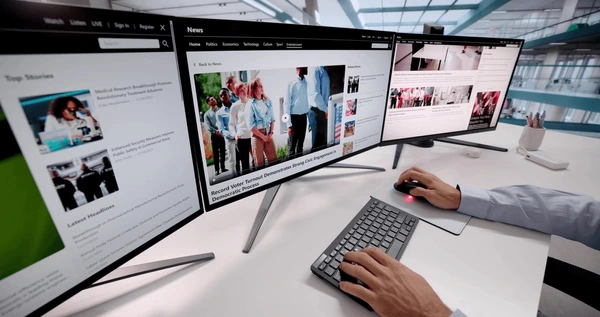
Good website copywriting speaks directly to your customer, matches what they are searching for, and guides them toward one clear action. It leads with benefits, uses plain language, is easy to skim, and includes your keywords naturally. Done well, it helps your pages rank on Google and turns more visitors into enquiries and sales.
Why website copywriting matters more than most SME owners think
Most Malaysian SME websites are written by the business owner in a rush, or copied loosely from a competitor. The result is a page full of company jargon that says very little to the person actually reading it. Your website copy is your hardest-working salesperson. It works around the clock, and unlike a real salesperson, it speaks to every visitor at once. If the words are weak, even a beautiful design will not convert.
Copywriting sits at the exact point where SEO and conversion meet. Search engines read your words to understand what your page is about, and human visitors read the same words to decide whether to trust you. Get the copy right and you win on both fronts. Get it wrong and you can pour money into ads and rankings while your pages quietly leak potential customers.
This guide walks through how to write website copy that both ranks on Google and persuades real Malaysian buyers. It is written for owners and marketing staff at small and medium businesses in Shah Alam, Klang Valley, Melaka and beyond, not for professional copywriters. You do not need to be a talented writer. You need a clear process, which is exactly what follows.
Copywriting vs content writing: know the difference
People use these terms loosely, but they are not the same job. Copywriting is writing designed to drive an action, such as your homepage, service pages, landing pages and product descriptions. Content writing is writing designed to inform and attract, such as blog posts and guides like this one. Both matter, and both feed your SEO, but they are written differently.
Copy on a service page needs to be tight, persuasive and focused on getting an enquiry. A blog post can be longer, more educational and patient, building trust over several minutes of reading. When you plan your site, decide which type each page is. Your money pages need strong copywriting, while your blog supports them through a wider content strategy.
A common mistake is treating every page like a blog post, burying the offer under paragraphs of background. Another is treating a blog post like an advert, so it reads as a hard sell and nobody finishes it. Match the writing style to the job the page has to do.
Start with your customer, not your company
The single biggest fix for most SME websites is a change of subject. Weak copy talks about the company: how long we have been established, how passionate our team is, how we are a leading provider. Strong copy talks about the customer: their problem, their goal, and how life looks after they hire you. Readers care about themselves first, which is normal and human.
Before writing a single line, list the three problems your ideal customer is trying to solve and the words they would use to describe them. If you sell air-conditioning servicing, they are not searching for HVAC thermal optimisation. They are thinking my aircon is not cold and my electricity bill is high. Write in their language, not your industry's.
A simple test: read each sentence and ask, so what does this mean for the reader. If a line only flatters your business without helping the customer picture a better outcome, rewrite it or cut it. This one habit lifts the quality of an entire website.
Match the search intent behind every page
Every page should answer a specific question or need that people actually type into Google. This is search intent, and it is the bridge between SEO and copywriting. If someone searches for website design price Malaysia, they want guidance and a rough cost, not a poem about your creative philosophy. Give them what the search implies they want, quickly.
Before writing, do proper keyword research so you know the exact phrases your market uses and the intent behind them. Our guide to keyword research for Malaysian SMEs walks through how to find these terms. Then build the page around that intent, using the main keyword in the headline and the supporting phrases through the body.
When copy matches intent, two good things happen. Google sees the page as a strong answer and ranks it higher, and visitors feel understood and stay longer. When copy ignores intent, people bounce back to the search results within seconds, which signals to Google that your page was not helpful.
Write headlines that earn the click and the read
Your headline is the most important line on the page. On a search results page it competes for the click, and on the page itself it decides whether people keep reading or leave. A vague headline like Welcome to Our Website wastes this prime space. A strong headline states a clear benefit or names the exact thing the visitor is looking for.
Good SME headlines are specific and concrete. Compare Professional Services You Can Trust with Affordable Accounting for Shah Alam SMEs, Fixed Monthly Fee. The second one names the customer, the location and the offer, so the right person instantly feels this is for me. Specificity beats cleverness almost every time on a business website.
Write five or six headline options for each important page before choosing one. Include your main keyword where it reads naturally, since the headline usually becomes your H1 tag and carries SEO weight. Then pick the version that is clearest, not the one that sounds most impressive to you.
Hook readers in the first five seconds
Once the headline earns attention, the opening lines must hold it. Visitors decide within a few seconds whether a page is worth their time. Do not waste the opening on history or throat-clearing. Lead with the reader's problem or the outcome they want, then promise that the page will help them get there.
A reliable opening pattern is problem, promise, proof. Name the frustration the reader feels, promise a better way, and hint at why you can be trusted to deliver it. For a web design page that might read: Your current website looks dated and brings in no enquiries. We build fast, modern sites that turn visitors into customers, and we have done it for businesses across the Klang Valley.
Keep opening sentences short and free of jargon. Long, dense first paragraphs push people away, especially on mobile where most Malaysian traffic now comes from. If a first-time reader would not understand the opening, simplify it until they would.
Turn features into benefits
SME owners naturally list features, because they know their product. Customers, however, buy benefits, which is what those features do for them. A feature is 24-hour monitoring. The benefit is you sleep easy knowing problems are caught before they cost you money. Your copy should connect every important feature to the outcome the customer actually cares about.
An easy method is the so that bridge. Write the feature, add the words so that, then finish the sentence with the benefit. We back up your data every night so that a ransomware attack cannot wipe out your business. We build on WordPress so that your team can update the site without paying a developer each time. The bridge forces you to make the value obvious.
You do not need to remove features entirely, since technical buyers often want them. The trick is to lead with the benefit and support it with the feature, not the other way around. People need a reason to care before they will pay attention to the specification.
Write for skimmers, not readers
Almost nobody reads a web page word for word. People scan, jumping between headings, bold phrases and the first line of each paragraph. If your page is a wall of text, skimmers give up and leave. Structure the copy so that someone can understand your offer just by scanning the headings and subheadings.
Use these formatting habits to make copy scannable:
- Short paragraphs of two to four sentences, never long unbroken blocks.
- Descriptive subheadings every few paragraphs that tell a story on their own.
- Bullet lists for features, steps or options, as you are reading now.
- Bold for the few phrases that matter most, used sparingly so they stand out.
- Plenty of white space, since crowded pages feel like hard work.
Clean structure also helps SEO. Clear headings using proper H2 and H3 tags help Google understand your page, and they pair naturally with strong on-page SEO. Writing to be skimmed is not dumbing down. It is respecting how busy people really use the web.
Weave keywords in naturally, never stuff them
Keywords still matter, but the era of repeating a phrase twenty times is long gone. Modern Google understands topics and synonyms, and keyword stuffing now reads as spam to both search engines and humans. Your job is to include your main keyword and related terms where they fit naturally, then write for the reader.
Place your primary keyword in a few high-value spots: the page title, the H1 headline, the first hundred words, at least one subheading, and the meta description. After that, use natural variations and related phrases through the body. If you sell website development, you might also mention web design, business website and building a website without forcing any of them.
Read your copy aloud when you finish. If a sentence sounds awkward because you crammed a keyword in, rewrite it so a real person would say it. Google rewards content that reads well and keeps visitors engaged, so natural, helpful writing is also the best SEO strategy.
Give every page one clear call to action
A page that asks visitors to do five things usually gets them to do nothing. Decide the single most important action for each page, then make that action obvious and easy. On a service page it might be request a quote. On a product page it might be add to cart. On a contact page it might be call us or fill in this form.
Write your call to action as a clear instruction that focuses on the benefit, not a vague label. Get My Free Website Audit beats Submit, and Book a Free Consultation beats Learn More. Place the main call to action high on the page for ready buyers, and repeat it near the end for those who needed convincing first.
Reduce friction around the action. Ask only for the details you truly need, reassure people about what happens next, and make phone numbers tappable on mobile. Strong copy that leads to a confusing or demanding form still loses the sale, so treat the call to action as part of the writing.
Build trust with proof and specifics
Malaysian buyers are cautious, and rightly so, because the internet is full of overpromising. Vague claims like best in class and world-class service actually lower trust, since anyone can type them. Specific, verifiable details do the opposite. Numbers, timeframes, named locations and real examples make your copy believable.
Weave proof throughout your pages rather than hiding it on a separate testimonials page. Mention how long you have served the Klang Valley, the kinds of businesses you help, your response times and your guarantees. If you have genuine reviews or case results, quote them near your call to action, where doubt is highest and a little reassurance tips the decision.
Never invent proof. Fake testimonials, made-up statistics and invented awards are easy to spot and destroy trust when found out. If you are early and lack case studies, be specific about your process and your promises instead. Honest specifics always beat empty superlatives.
Homepage copywriting: say what you do in seconds
Your homepage has one job above the fold: make it instantly clear what you do, who you help and why it matters. A visitor should understand your business within five seconds of landing. Yet many SME homepages open with a slideshow and a slogan that could belong to any company in any industry, leaving people confused.
Use a simple hero formula: a headline stating the main benefit, a subheadline explaining who it is for and how it works, and one clear call to action. For example, Fast, Affordable Websites for Malaysian SMEs, followed by We design and build sites that rank on Google and win customers, from RM999, with a Get a Free Quote button. Clarity first, personality second.
Below the hero, guide visitors deeper with short sections that lead to your key pages, such as services, about and contact. The homepage is a signpost, not the place to explain everything. Its copy should quickly orient people and send them toward the page that matches their need.
Service page copywriting that ranks and converts
Service pages are often your most valuable pages, because they capture people actively looking to buy. Each core service deserves its own dedicated page with its own copy, rather than being lumped into one crowded list. This helps you rank for specific searches and lets you speak in depth to each type of buyer.
Structure a service page to answer the buyer's questions in order: what the service is, who it is for, what problems it solves, how it works, what it costs and what to do next. Use benefit-led subheadings, a clear price framing such as from RM1,000 per month for SEO, and proof near the call to action. Link related services together so visitors can move between them easily.
This is also where good internal linking pays off. From a service page you can point readers to relevant guides and to your main offers such as SEO and Google ranking or website development. These links help visitors and help Google understand how your pages relate, strengthening the whole site.
Product and eCommerce copywriting
Product descriptions are copywriting too, and default manufacturer text is a wasted opportunity. If you paste the same description every other seller uses, you have thin, duplicate content that struggles to rank. Writing your own descriptions, even short ones, gives each product unique copy that Google can index and shoppers can connect with.
Good product copy blends the practical and the persuasive. Include the specifics people need, such as size, material, compatibility and what is in the box, and pair them with the benefit and a little personality. Answer the obvious buyer questions in the copy so shoppers do not have to leave the page to find them, which reduces hesitation.
For a Malaysian online store, also address local concerns directly in your copy: delivery times within Peninsular and East Malaysia, payment options, warranty and returns. Clear, reassuring product and policy copy removes friction, and combined with a well-built eCommerce site it turns more browsers into buyers.
Writing for AI search and answer engines
Search is changing. More Malaysians now get answers from AI tools and from Google's AI summaries without clicking through to a website. To stay visible, your copy needs to be quotable, which means giving clear, direct answers that a machine can lift and cite. Rambling, vague pages get skipped by these systems.
Practical habits help here. Answer the core question of each page in one or two clean sentences near the top, use plain phrasing, and structure content with descriptive headings and short paragraphs. Frequently asked questions written in a real question-and-answer format are especially easy for AI to reuse. Clear copy that helps a human also helps an answer engine.
This does not mean writing for robots. The same qualities that make copy good for people, clarity, structure and directness, make it good for AI search. Focus on being the clearest, most useful answer to your customer's question, and you position yourself well for both traditional rankings and the newer AI-driven results.
Localise your copy for Malaysia
Generic global copy rarely connects with a local audience. Malaysian SMEs win by sounding local and relevant. Mention the areas you serve, such as Shah Alam, Petaling Jaya, Klang and Melaka, and reference local context where it fits. This builds trust with nearby customers and supports your local SEO at the same time.
Small language choices matter. Use Ringgit and local spelling, refer to real local landmarks or business districts when relevant, and keep the tone friendly and straightforward, which suits the Malaysian market. Avoid heavy corporate jargon and avoid copying American phrasing that can feel distant. Write the way you would actually explain your service to a customer over the counter.
Be careful with claims and pricing so your copy stays honest and compliant. Frame prices as from a figure rather than a fixed promise, since projects vary, and avoid exaggerated guarantees. Clear, honest, locally grounded copy is both more persuasive and safer for your business.
Common copywriting mistakes to avoid
Even well-meaning SME owners fall into the same traps. Knowing them in advance saves you from rewriting later. Most of these mistakes come from writing for yourself instead of your customer, or from trying to sound impressive rather than being clear.
Watch out for these common errors:
- Talking about your company before addressing the customer's problem.
- Vague headlines that do not say what you do or who you help.
- Walls of text with no headings, bullets or white space.
- Listing features without translating them into benefits.
- Stuffing keywords until the writing sounds unnatural.
- Multiple competing calls to action that confuse the reader.
- Empty superlatives with no proof to back them up.
- Ignoring mobile readers, who are now the majority.
If you audit your existing pages against this list, you will usually find several quick wins. Fixing even two or three of these across your key pages can noticeably lift both rankings and enquiries, often without changing the design at all.
Key takeaways
Website copywriting is where SEO and conversion meet. The same clear, customer-focused writing that ranks on Google also persuades real buyers to enquire and purchase. You do not need to be a gifted writer, you need a repeatable process built around your customer.
Start with your customer's problem and language, match each page to search intent, lead with benefits, write to be skimmed, weave keywords in naturally, and give every page one clear call to action backed by honest proof. Localise your copy for Malaysia and keep it clear enough for both people and AI search to use.
If writing and optimising your pages feels like more than you can take on, Cybergate can help. We combine copywriting, SEO and web development to build sites that earn rankings and win customers for SMEs across Shah Alam, the Klang Valley and Melaka. Get in touch for a straightforward quote.
Need help with this?
Cybergate provides IT support, cybersecurity, Microsoft 365 and SEO for Malaysian businesses. Free consultation, no obligation.
Get Free Consultation WhatsApp Us