SEO & Web - 2026-08-20 - by Kartik Periasamy
Start with a one page brief describing what the website must achieve, then judge providers on more than the mockup. Check live sites on your own phone, confirm you will own the domain, hosting and admin access, ask what SEO basics are included in the build, and get scope, milestones and after-launch support in writing. Walk away from anyone guaranteeing a number one Google ranking.
Why the company you pick matters more than the design itself
Almost every web design company in Malaysia can produce something that looks reasonable in 2026. Templates are good, page builders are mature, and stock photography is cheap. What separates one provider from another is not whether the homepage looks nice on the day it launches. It is whether the site loads fast on a mid-range phone, whether Google can crawl and index it, whether you can update it yourself, and whether anyone answers the phone six months later when a plugin breaks.
That is why a buying decision made purely on the design mockup is risky. The mockup is the easiest part of the job to fake. The hard parts, which are structure, speed, content, indexing and long-term support, are invisible in a PDF proposal. A business owner in Shah Alam who signs based on a pretty picture often ends up paying twice, once for the original build and once for the rebuild eighteen months later.
This guide walks through what to look for, what to ask, and what to avoid, in the order you will actually need it. If you want the pricing side in more detail, our website design cost guide for Malaysia breaks down what different budget bands really buy.
Decide what the website is for before you shortlist anyone
The single biggest cause of a disappointing website project is a brief that was never written. If you go to three companies and say only that you need a new website, you will get three very different quotations that cannot be compared, and none of them will be wrong. Spend an hour writing down what the site must do before you talk to anyone. It changes the entire conversation.
Be specific about the commercial job. Is the site meant to generate enquiries from Google, support a sales team that sends links to prospects, sell products online, or simply look credible when someone checks you out after a referral? A lead generation site and a brochure site are built differently, cost differently, and are measured differently. A company that does not ask you this in the first meeting is not really listening.
- The main outcome: enquiries, online sales, credibility, recruitment, or investor confidence
- Who the visitor is and what they need to see before they trust you
- Roughly how many pages, and which ones are commercially important
- Whether you need Bahasa Malaysia or Chinese versions
- Who inside your company will maintain it after launch
- A realistic budget range and a target launch date
Know the three kinds of web providers in Malaysia
Broadly, you will meet three types. The freelancer or one-person studio, often very affordable and sometimes excellent, but with real risk around availability, illness and disappearing after launch. The small agency of roughly three to fifteen people, which is where most Malaysian SMEs land, because you get a team but still speak to someone who understands your business. And the larger agency or digital arm of a marketing group, which is capable but usually priced for corporate budgets and slower to respond to small requests.
None of these is automatically the right answer. A cafe with a five page site does not need a fifteen person agency. A manufacturer with a technical product catalogue, multiple languages and an enquiry pipeline should not rely on one freelancer who also has a full-time job. Match the size of the provider to the size and complexity of the job, and to how much hand-holding you expect.
There is also a fourth category worth naming: the IT company that also does websites, or the web company that also does IT. That combination can work well when it is genuine, because the same team handles your domain, email, hosting and site without finger-pointing. Ask honestly which side of the business is the real strength, and whether the web work is done in-house or quietly subcontracted.
What a realistic budget looks like in 2026
In Malaysia in 2026, a professional small business website generally starts from RM999 for a compact, well-built brochure site and rises from there based on page count, custom design work, content writing, languages and functionality. eCommerce, booking systems, membership areas and multi-language builds sit meaningfully higher because they involve more pages, more testing and more edge cases.
Be suspicious of both extremes. A RM300 website is almost always a stock template with your logo dropped in, no content strategy, no proper indexing setup, and no support. At the other end, a five-figure quotation for a ten page SME site should come with a very clear explanation of where that money goes, whether that is custom design, original photography, professional copywriting, or complex integrations.
Also budget for the parts people forget. Domain renewal, hosting, an SSL certificate, ongoing maintenance and content updates are recurring costs, not one-off ones. Our hosting and domains guide covers what those actually cost and who should hold the accounts. Cybergate is not SST-registered, so a quoted price is the final price, which makes comparison easier.
Look at their portfolio properly, not just the screenshots
Every portfolio page shows tidy mockups on floating laptop screens. That tells you very little. Open the live sites instead. Visit three or four of their recent projects on your own phone, on mobile data rather than office Wi-Fi, and see how they behave. Do they load quickly, does the navigation work with a thumb, is the phone number tappable, does the enquiry form actually submit?
Then check whether those sites still exist and are still maintained. A portfolio full of links that now redirect elsewhere or show a broken layout suggests clients moved on quickly. Look for at least one project in a similar industry or with a similar structure to yours. Design taste transfers between industries, but understanding of a buying process usually does not.
Finally, search Google for the client business name plus its service and town. If none of an agency's clients rank for anything, that is a signal about how the sites are built. It is not proof, because the client may never have paid for SEO, but combined with other checks it tells you where their priorities sit.
Check whether they build for search, not just for looks
A website that nobody finds is an expensive brochure. Ask directly how the build handles the basics of search: page titles and meta descriptions, a sensible heading structure, clean URLs, image alt text, an XML sitemap, and a robots file that does not accidentally block the whole site. These are not optional extras, they are part of building a website properly, and a competent developer should include them without being asked.
There is a common and expensive failure where a beautiful site launches with the staging environment settings still in place, quietly telling Google not to index anything. Months pass, traffic never arrives, and nobody knows why. Ask what their launch checklist covers and whether they set up Google Search Console and verify indexing after go-live.
Understand also that building a site correctly is not the same as ranking it. On-page structure gets you eligible to compete. Getting to page one against established competitors takes ongoing content and authority work, which is a separate service. Our SEO service page explains where the line sits, and the SEO agency buyer guide covers that decision separately.
Ask who will own the website, the domain and the hosting
This is the question that saves the most pain later, and it is the one most owners forget. Ask, in writing, who the registrant of the domain will be, whose account the hosting sits in, and whether you receive full administrator access to the website after final payment. The answer should be that you own all three, with the agency holding access to do their work.
The bad pattern looks like this: the agency registers the domain in their own name, hosts it on their reseller account, and never hands over the admin login. Everything is fine until you want to change provider, and then you discover you are renting your own brand. Recovering a domain from an uncooperative former supplier is slow, sometimes impossible, and always more expensive than getting it right at the start.
- Domain registered in your company name, with your email as the contact
- Hosting account in your name, or clearly transferable on request
- Full admin access to the website after final payment
- A copy of the site files and database provided on request
- Clear, written confirmation that you own the design and content you paid for
Understand the platform they will build on
Most Malaysian SME sites end up on WordPress, a hosted builder such as Wix or Shopify, or a custom-coded framework. Each is a legitimate choice for the right situation and a bad choice for the wrong one. WordPress gives flexibility and portability but needs maintenance. Hosted builders are simpler and safer but lock you into a platform and monthly fee. Custom builds are fast and precise but tie you to a developer who understands the code.
What matters more than the label is whether the provider explains the trade-off or simply pushes what they always use. Ask what happens if you want to move away in three years, what the ongoing licence costs are, and whether the site depends on premium plugins or themes that expire. A build that quietly relies on six paid plugins has a renewal bill attached to it.
We compared the practical differences in Wix vs WordPress vs custom websites, including which situations genuinely justify the extra cost of a custom build. Read it before the first meeting so you can ask better questions.
Be clear about who writes the content and supplies the photos
Content is where most website projects stall. The design is approved in week two, and then the project sits for three months because nobody sent the service descriptions, staff bios or product photos. Before signing, agree explicitly whether copywriting is included, how many pages of writing that covers, and what happens if you supply the text late.
If writing is included, ask to see a sample of copy the team has written for a similar business, not a design mockup with placeholder text. Good website copy for a Malaysian SME is specific, easy to scan and written for the customer, not a wall of corporate language. Our website copywriting guide covers what good looks like.
Photography deserves the same treatment. Real photos of your premises, team and work almost always outperform stock images for trust, especially for local service businesses. Decide early whether you will shoot your own, commission a photographer, or accept stock, because that choice affects both the design and the timeline.
Insist on mobile, speed and Core Web Vitals being part of the build
The majority of Malaysian visitors will see your site on a phone, often on mobile data rather than fibre. A site that looks stunning on a designer's large monitor and takes eight seconds to load on a mid-range Android in a Melaka carpark is not a good website, whatever the mockup suggested. Test on real devices before accepting the build.
Ask how the provider handles image compression, caching, and the total weight of the page. Heavy sliders, autoplaying video backgrounds and multiple font families are the usual culprits. A well-built SME page should generally load its main content in a couple of seconds on a normal mobile connection, and pass Google's Core Web Vitals thresholds.
Make performance an acceptance criterion rather than a hope. Agree that before final payment, the key pages will be checked on mobile and meet an agreed standard. Our guides on responsive mobile design and site speed and Core Web Vitals give you the specifics to quote in your brief.
Find out what happens after launch
A website is not a painting you hang once. Plugins update, PHP versions change, contact forms silently stop delivering, SSL certificates expire, and platforms deprecate features. The question is not whether the site will need attention, it is who does that work and on what terms. Ask what is included in the first month, what a maintenance plan covers, and what the response time is when something breaks.
Get the support model in writing. Is it email only, or can you call? Are small text changes included or billed hourly? Is there a monthly backup, and is the backup stored somewhere other than the same server? An agency that has thought carefully about support will answer these quickly. One that has not will give vague reassurance.
If you would rather handle small edits yourself, ask for a short handover session and a simple written guide covering how to update text, add a blog post and change images. Our website maintenance guide sets out what a sensible ongoing routine looks like for an SME.
Questions to ask before you sign anything
Take this list to every meeting and ask the same questions of each provider. Consistency is what makes quotations comparable. Watch not only the answers, but how comfortable the provider is being pinned down. Confident teams answer plainly. Providers who deflect on ownership, timelines or support are telling you something.
- Who owns the domain, hosting and website admin access after payment?
- What platform will you build on, and why that one for my business?
- Is copywriting included, and for how many pages?
- What SEO basics are included in the build, and what is not?
- How many rounds of revision are included before it becomes chargeable?
- What is the payment schedule and what triggers each milestone?
- What happens after launch, and what does support cost?
- Who exactly will do the work, and are any parts subcontracted?
- Can I speak to two recent clients?
The last one matters more than people expect. A short phone call with a past client tells you about communication, delays and after-sales behaviour in a way no portfolio can. Ask that client one specific question: what was the most frustrating part of the project?
Red flags that should end the conversation
Some warning signs are worth walking away from immediately. A guarantee of number one rankings on Google is the clearest, because nobody can promise that and any provider who does is either misinformed or willing to mislead you. Similar promises about specific traffic numbers within a fixed timeframe deserve the same scepticism.
Pressure tactics are another. Discounts that expire today, insistence on full payment before any work begins, or refusal to put the scope in writing all point to a provider who expects the relationship to go badly. So does an inability to give you a named contact person, or a proposal that consists of a price with no description of what is being delivered.
- Guaranteed number one Google rankings
- Refusal to register the domain in your name
- No written scope, only a price
- 100 percent payment demanded upfront
- Portfolio links that are dead or now point to other agencies
- No contactable office address or company registration details
- Unwillingness to hand over admin access after final payment
How to compare quotations fairly
Three quotations at RM2,000, RM6,000 and RM15,000 are not three prices for the same thing. Before comparing, normalise them. Line up the page count, whether copywriting is included, how many revision rounds, whether hosting for the first year is bundled, and whether ongoing support is part of the fee or extra. Very often the cheapest quote becomes the most expensive once the missing items are added back.
Build a simple table with one row per deliverable and one column per provider. Mark anything unclear as unknown and go back and ask. This exercise takes twenty minutes and routinely changes which quotation looks best. It also signals to the provider that you are a considered buyer, which tends to improve the quality of the answers you receive.
Then weigh the intangibles. Responsiveness during the sales process is the best available predictor of responsiveness after launch. If a provider takes five days to answer a simple pre-sales question while trying to win your business, imagine how long a support request will take once the invoice is paid.
Get the contract, milestones and payment terms right
You do not need a complicated legal document, but you do need something in writing that names the deliverables, the timeline, the number of revisions, the payment schedule and what happens if either side wants to stop. A two or three page scope document signed by both parties prevents the majority of disputes.
A common and fair structure is a deposit to start, a payment at design approval, and the balance at launch. Avoid paying everything upfront, and be equally wary of a provider willing to do the whole build with no deposit at all, because that often signals they will deprioritise you the moment a paying client appears.
Also agree what counts as complete. Ambiguity about completion is where projects turn sour. Define it concretely: agreed pages built and populated, tested on desktop and mobile, forms delivering to the right inbox, SSL active, analytics installed, sitemap submitted, and admin access handed over. When those are done, the project is done.
Set a realistic timeline
For a typical Malaysian SME brochure site of eight to fifteen pages, a realistic timeline is around four to eight weeks from kick-off to launch, assuming content arrives on time. eCommerce builds and multi-language sites take longer. Anyone promising a complete, well-researched custom site in five days is either using a template with your logo swapped in, or is about to miss the deadline.
The bottleneck is almost never the developer. It is content approval and internal decision-making on your side. Nominate one person in your business as the decision maker, agree who signs off, and block time in the calendar for the review rounds. Projects run by committee take twice as long.
Plan the launch itself too. If you are replacing an existing site, redirects from old URLs to new ones must be mapped before go-live or you will lose rankings you already have. Our guide to redesigning without losing SEO covers exactly how to do that.
Why a local team in the Klang Valley or Melaka helps
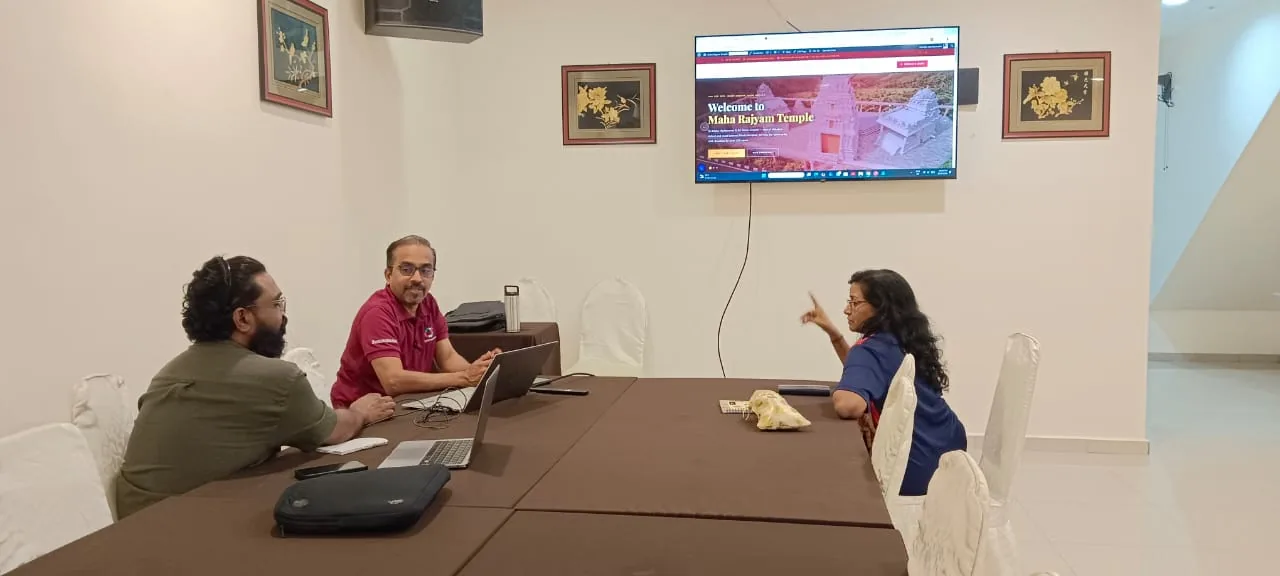
Distance is not fatal, and plenty of good work happens entirely over email. But there are practical advantages to a provider who can meet you. Sitting in a room with the person building your site, walking through pages on a screen together, and pointing at what is wrong is far faster than three days of message threads. It also builds a working relationship that survives the inevitable moment when something goes wrong.
A local provider also understands the market context. They know what a Malaysian buyer expects to see, how WhatsApp fits into an enquiry flow, that prices are often quoted on request, and that a Shah Alam industrial supplier sells very differently from a Melaka boutique hotel. That context shortens the brief considerably.
Cybergate is based in Shah Alam with an office in Melaka, and we work across the Klang Valley including Petaling Jaya, Klang and Kuala Lumpur. We build and maintain sites through our website development service, and we also handle the underlying IT and hosting when clients prefer one supplier for everything.
Key takeaways
Choosing a web design company is really a decision about the next three years, not the next three weeks. Judge providers on ownership, structure, speed, content and support, because those determine whether the site earns its keep long after the launch excitement fades.
- Write a one page brief before you approach anyone
- Match the provider size to the complexity of your project
- Insist that you own the domain, hosting and admin access
- Check live sites on your own phone, not portfolio screenshots
- Confirm SEO basics and indexing are part of the build
- Agree who writes the content before the project starts
- Get scope, milestones and support terms in writing
- Walk away from guaranteed ranking promises
If you want a second opinion on a quotation you have received, or a straight answer on what your project should realistically cost, talk to us. We will tell you if the scope in front of you is reasonable, even if the answer is that you should stay where you are.
Need help with this?
Cybergate provides IT support, cybersecurity, Microsoft 365 and SEO for Malaysian businesses. Free consultation, no obligation.
Get Free Consultation WhatsApp Us