SEO & Web - 2026-09-22 - by Cybergate Technology
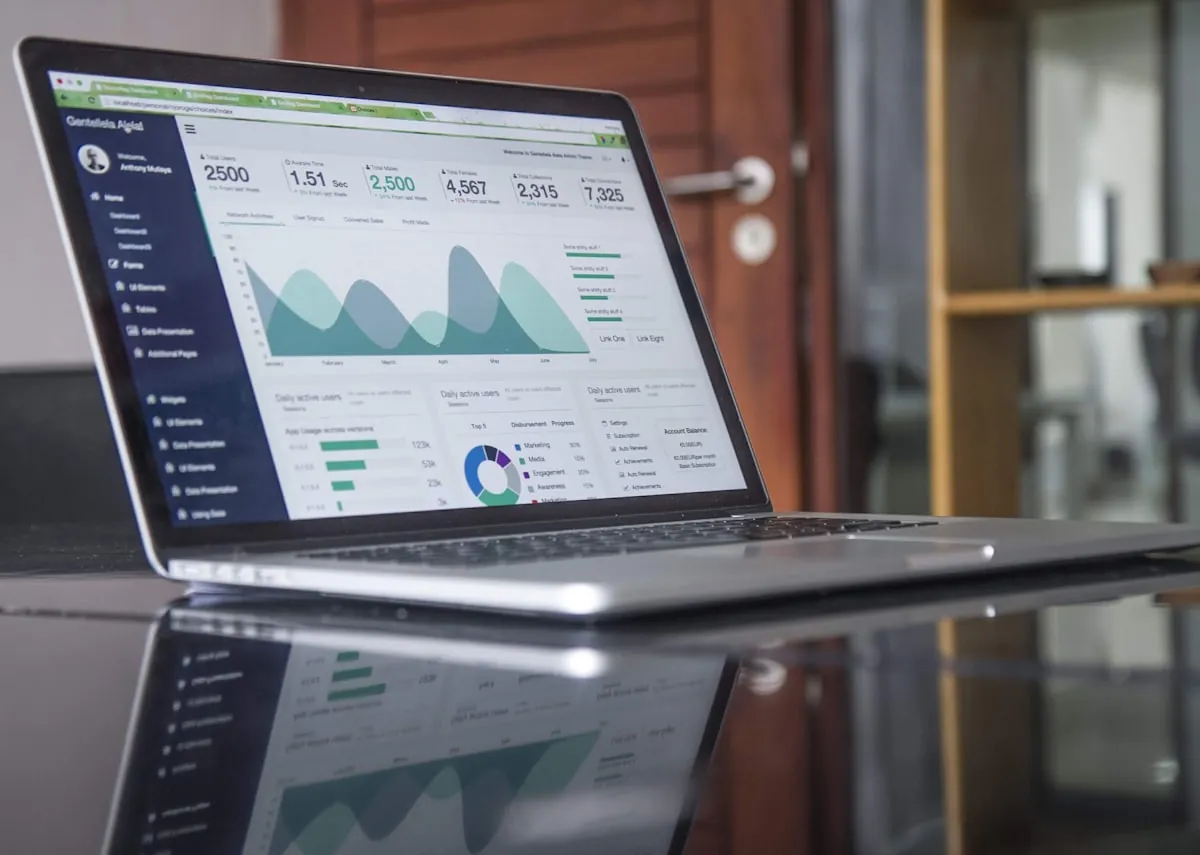
A good SEO report should connect three layers: visibility (keyword rankings and impressions), traffic (organic sessions and click-through rate), and business results (leads, calls, enquiries and sales from organic search). If your report only shows rising traffic or rankings without tying them to enquiries or revenue, ask your agency to add that layer. Numbers that look impressive but never touch your bottom line, like total keywords tracked or raw pageviews, are usually vanity metrics rather than proof of SEO work paying off.
What a Good SEO Report Should Actually Contain
Every SEO agency formats reports differently, but a genuinely useful one always answers three questions: is my visibility improving, is that visibility turning into traffic, and is that traffic turning into enquiries or sales. A report that only shows the first two without the third is incomplete, because rankings and traffic are the input, not the outcome your business actually cares about.
If you have never asked your agency to show you leads or calls generated from organic search, that is the first thing to request. It is a reasonable ask, and any agency doing proper SEO for Malaysian businesses should already be tracking it through call tracking, form submissions or goal completions in Google Analytics.
It also helps to agree upfront, before the first report ever lands in your inbox, on which few numbers you personally care about most. An agency serving many clients cannot guess which metric matters to your specific business, whether that is walk-in enquiries, online orders, or B2B quote requests, so naming that priority early makes every future report faster to read.
Keyword Rankings: What Position Actually Means
Most reports lead with a rankings table showing your position for a list of target keywords. Position 1 to 3 typically captures the majority of clicks on a search results page, position 4 to 10 gets a meaningful but smaller share, and anything on page 2 or beyond gets very little traffic regardless of how good the keyword looks on paper.
What matters more than any single number is the trend and the commercial intent of the keyword. Ranking number 1 for a keyword nobody searches is worthless, while moving from position 14 to position 6 for a high-intent keyword like 'website design Shah Alam' or 'SEO agency Melaka' can meaningfully change your enquiry volume even though it is not yet page 1 top 3.
- Positions 1 to 3: highest click share, prioritise these keywords first
- Positions 4 to 10: still valuable, especially for less competitive local terms
- Position 11 and beyond: rarely generates clicks, treat as work in progress
Organic Traffic: Sessions, Users and Why More Isn't Always Better
Organic sessions and users are the most commonly reported metric because they are easy to pull from Google Analytics, but raw traffic numbers can be misleading on their own. A spike in sessions from an irrelevant keyword or a viral but unrelated blog post inflates the chart without bringing in a single potential customer.
The more useful version of this metric is organic traffic segmented by landing page, so you can see whether the growth is happening on pages that actually sell your services, like your homepage, service pages or location pages, versus pages that only attract browsers. If you have covered Google Analytics 4 basics, this segmentation is a simple filter to ask your agency to add.
It also helps to compare organic traffic against your other channels, like paid ads, social media and direct visits, in the same report. If organic is a small sliver of total traffic while you are paying an agency a monthly retainer for SEO, that imbalance is worth discussing openly rather than assuming the channel is simply slower to grow.
Impressions and Click-Through Rate From Search Console
Google Search Console reports impressions, which is how many times your site appeared in search results, and click-through rate, which is the percentage of those impressions that resulted in a click. Rising impressions with flat clicks usually means you are starting to rank for more searches but your titles and meta descriptions are not persuasive enough to earn the click.
This is a fixable problem and a good sign your report should highlight rather than bury. If you already understand the basics from a Google Search Console guide, ask your agency specifically about pages with high impressions and low click-through rate, since rewriting those titles is often a quick win that costs nothing extra.
It is also worth checking whether impressions are growing for keywords close to your business, such as your service plus your city, versus broad generic terms that may never convert even if they generate volume. A report that lumps all impressions together without this distinction can make progress look bigger or smaller than it really is.
Leads, Calls and Enquiries: The Metric That Pays the Bills
This is the section most SEO reports skip, and it is the one that matters most to a business owner. Whether your business measures success in phone calls, WhatsApp messages, contact form submissions, or online orders, your report should show how many of those came from organic search specifically, not lumped in with all traffic sources together.
Setting this up requires call tracking on your Google Business Profile number, goal tracking on your contact form, or e-commerce tracking on your checkout, all of which are one-time setup tasks. If your current report cannot show this, it is worth asking whether your website even has the tracking in place to measure it at all.
Bounce Rate and Engagement Time: What They Really Tell You
Bounce rate and average engagement time get reported often but are frequently misread. A high bounce rate on a page designed to answer one specific question, like a phone number lookup or an address page, is completely normal and not a problem to fix.
Where these metrics matter is on pages meant to convert, such as your services page or a landing page for a specific campaign. If visitors are landing there and leaving within a few seconds, that points to a mismatch between what your ads or search snippet promised and what the page delivers, which is a conversion rate issue as much as an SEO one.
Backlinks and Domain Authority
Reports often include a backlink count or a domain authority score from a third-party tool. These numbers are useful directional indicators of how your site's authority is building over time, but they are not Google metrics and Google does not use domain authority scores directly in ranking.
What matters more than the raw number is the quality and relevance of new links, ideally from Malaysian business directories, industry associations, news mentions or genuine partner websites rather than low-quality link farms. If your report shows backlink count rising fast with no explanation of where those links came from, ask directly.
Technical Health: Core Web Vitals, Crawl Errors and Indexing
A section on technical health should flag anything blocking Google from properly crawling or ranking your site: broken pages, slow load times, mobile usability issues, or pages accidentally excluded from the index. These issues are often invisible to you as the site owner but can quietly cap how well your content performs no matter how good the writing is.
This section connects directly to on-page work like ongoing SEO and to your website's underlying build quality, since a slow or poorly coded site makes every other SEO effort work harder for the same result.
Local SEO Metrics: Google Business Profile Insights
If your business serves customers in a specific area, whether that is Shah Alam, Melaka, or across the Klang Valley, your report should include Google Business Profile performance: how many people viewed your listing, requested directions, clicked to call, or clicked through to your website from the map pack.
These numbers often move faster than organic rankings, especially for a newly optimised profile, and are one of the clearest early signals that local SEO work is paying off before broader keyword rankings catch up.
Photo views, review count and review response rate are also worth tracking inside this section, since an active, well-reviewed profile tends to outperform a neglected one even with similar rankings. If your report never mentions your Google Business Profile at all and your business depends on local customers, that is a meaningful gap worth raising with your agency.
Vanity Metrics to Watch Out For
Some numbers look impressive in a slide but say little about actual performance. Total keywords tracked, total pages indexed, or total backlinks acquired can all rise steadily while your enquiry volume stays flat, because none of them are tied directly to commercial intent or conversion.
- Total keywords ranked, without showing which ones actually get searched
- Raw pageviews, without segmenting by which pages drive enquiries
- Social shares or backlink count alone, without quality context
- Time on page for informational content that isn't meant to convert
None of these are useless outright, but they should support a business outcome in the same report, not stand in for one.
How Often You Should Expect a Report
Monthly reporting is the standard for most Malaysian SMEs running ongoing SEO, since search rankings move gradually and monthly cycles give enough data to see meaningful trends without reacting to daily noise. Weekly reporting is sometimes offered during the first few months of a new campaign or right after a website migration, when closer monitoring is genuinely useful.
What matters more than frequency is consistency. A report that changes its metrics or format every month makes it hard to track progress, so ask your agency to keep the core layout stable even as the underlying numbers change.
Red Flags in an SEO Report
Certain patterns in a report are worth questioning directly. A report with no month-over-month comparison, only a snapshot of the current state, makes it impossible to judge whether things are actually improving. Similarly, a report that changes which keywords it tracks every month can be a way of always showing something moving upward while quietly dropping the keywords that stalled.
- No comparison to the previous month or to when the campaign started
- Keywords tracked change frequently with no explanation
- Traffic numbers with no breakdown by landing page or source
- No mention of leads, calls or conversions at all
- Heavy use of jargon with no plain-English summary
Questions to Ask Your SEO Agency About the Report
A short list of direct questions can clarify more than an hour of reading charts. Ask which keywords are being tracked and why those specific ones were chosen for your business. Ask how organic leads or calls are being measured, and ask to see the underlying Search Console and Analytics data yourself rather than only a summarised dashboard.
If you are still deciding who to work with, our guide on choosing an SEO agency covers the questions worth asking before you sign, and the reporting section of that relationship is just as important as the initial pitch.
It is also reasonable to ask what did not work this month and why, not only what improved. An agency confident in its process should be comfortable explaining a flat or slightly negative month, since search rankings rarely move in a straight line and a defensive non-answer to a fair question is itself worth noticing.
Setting Realistic Benchmarks and Goals
SEO in Malaysia typically shows early movement within two to four months and more substantial ranking gains over six to twelve months, depending on competition in your industry and city. Setting a realistic monthly benchmark, for example a specific increase in organic leads or a target number of keywords in the top ten, gives your report something concrete to be measured against rather than a vague sense of whether it is working.
Costs for ongoing SEO in Malaysia generally start from around RM1,000 per month depending on scope and competitiveness, and a report should make it clear what that spend is actually buying month to month rather than leaving you to guess.
It also helps to separate benchmarks by keyword difficulty rather than judging all target keywords against the same timeline. A local keyword with little competition in Melaka may reach page one within weeks, while a competitive Klang Valley term in a crowded industry can reasonably take longer, and a report that treats both the same way sets an unfair expectation either way.
Turning Report Data Into Action
A report is only useful if it leads to a decision. If a particular service page has high impressions but low click-through rate, the action is rewriting the title and meta description. If a location page has strong rankings but low conversions, the action might be reviewing the page's calls to action or checking that your website loads quickly and displays properly on mobile.
Ask your agency to end every report with a short list of what changed this month and what they are doing next, rather than only presenting numbers and leaving the interpretation to you.
SEO Reports vs Paid Ads Reports: Why They Look Different
If your business also runs Google Ads or social media ads, you may notice the reporting style feels different from your SEO report, and that is expected rather than a sign one channel is being reported poorly. Paid ads reporting tends to be immediate, showing cost per click and conversions from the last few days, because paid traffic starts and stops the moment you turn spend on or off.
SEO reporting is inherently slower and more cumulative, since rankings build over weeks and months rather than switching on instantly. A useful SEO report should set that expectation clearly, especially in the first few months of a new campaign, so a slower start is read correctly as normal progress rather than a sign the work isn't happening.
Dashboards, Spreadsheets or Slide Decks: Does the Format Matter
Some agencies deliver an SEO report as a live dashboard you can log into anytime, others send a PDF or slide deck once a month, and some use a shared spreadsheet that updates automatically. None of these formats is inherently better, and the right choice often comes down to how involved you personally want to be in checking the numbers.
What matters more than the format is whether you can actually get an answer when you have a question. If a static PDF report leaves you unable to dig into a specific page or keyword without emailing your agency and waiting days for a reply, a live dashboard or shared spreadsheet with drill-down access is usually the more practical choice for a busy business owner.
Key Takeaways
- A useful SEO report connects rankings and traffic to real business outcomes like leads and calls
- Keyword position matters less than commercial intent and month-over-month trend
- Watch for vanity metrics like raw pageviews or keyword count with no context
- Google Business Profile data is one of the fastest-moving local SEO signals
- Ask direct questions if a report has no comparison period or no conversion data
- Set a realistic monthly benchmark so progress can be judged against something concrete
Our monthly reports combine Semrush rank tracking, Google Search Console, GA4 and Tag Manager conversion tracking, with Microsoft Clarity recordings to show where visitors drop off.
Need help with this?
Cybergate provides IT support, cybersecurity, Microsoft 365 and SEO for Malaysian businesses. Free consultation, no obligation.
Get Free Consultation WhatsApp Us